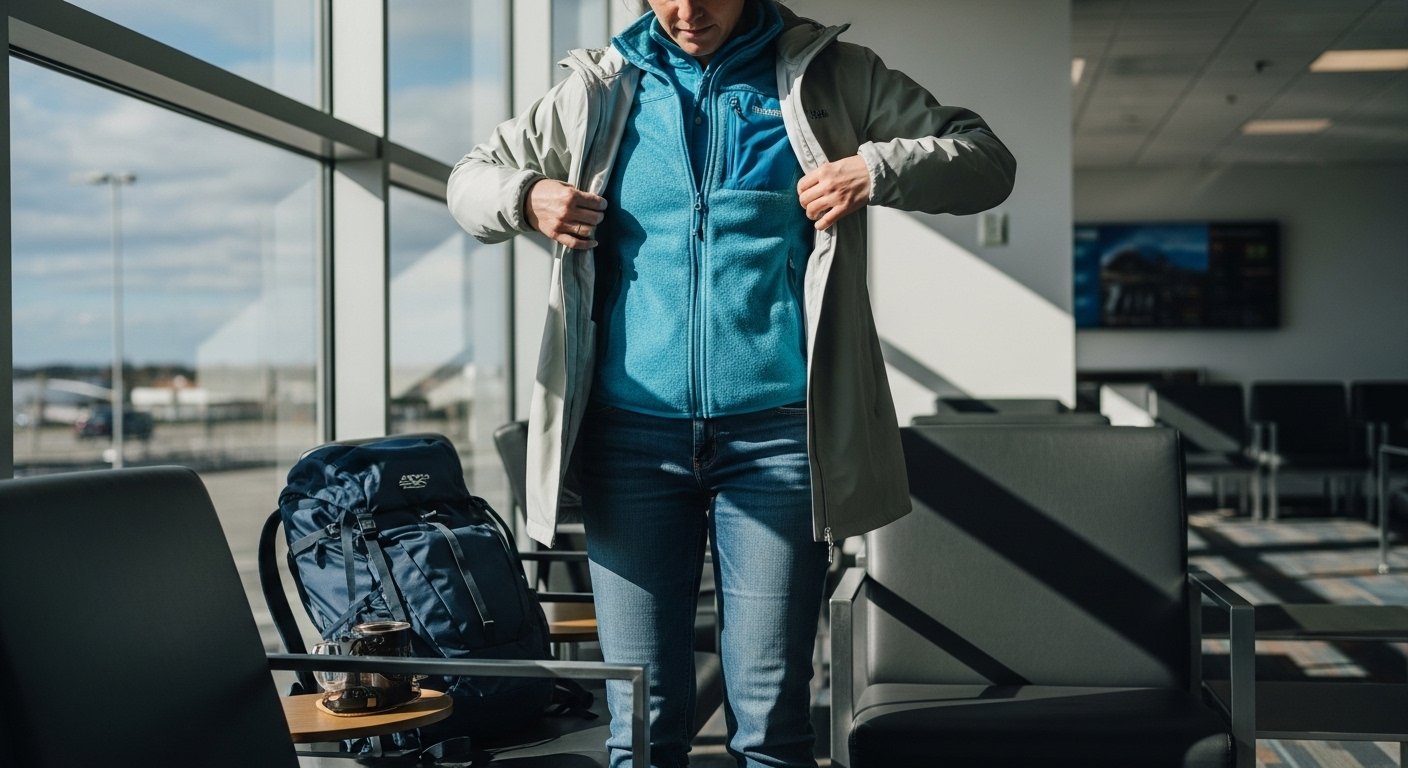
I landed in Dublin expecting mild spring days. Instead, rain hit by noon, then sun broke through. My thin sweater soaked up, left me shivering. I rummaged my bag for extras, but nothing fit right.
That trip taught me layers aren't just clothes. They're about staying comfortable without bulk.
Now I layer with intention. No more guessing what the day brings.
How To Layer Travel Outfits For Changing Weather
This guide shows you my simple way to build outfits that adapt to weather shifts. You'll end up comfortable from morning chill to afternoon heat, bag stays light. It's practical for any trip.
What You’ll Need
- Merino wool long-sleeve base layer shirt, medium gray, women's size M
- Lightweight fleece pullover, black, zip-front, men's small
- Packable waterproof rain shell jacket, olive green, unisex medium
- Quick-dry travel pants, navy, relaxed fit, women's 8
- Buff neck gaiter, neutral gray, merino blend
- Light merino wool socks, crew height, black, three-pack
- Versatile travel scarf, lightweight cashmere blend, camel color
- Compression packing cubes, set of 4, medium size
Step 1: Start with a Breathable Base Layer
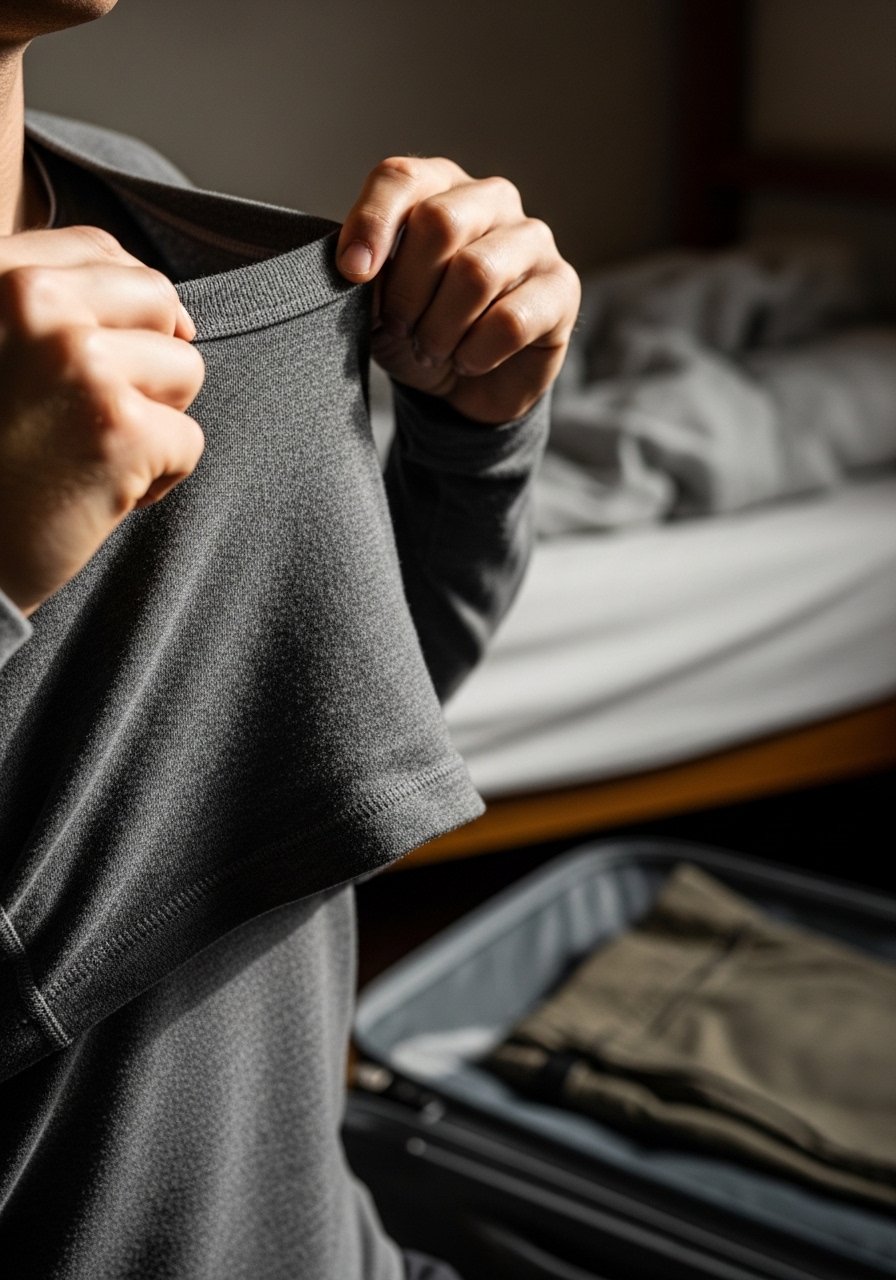
I always begin with a merino wool base. It wicks sweat, stays dry. On a base, I feel the day's first shift—cool morning air doesn't stick.
This changes everything. Skin stays comfortable, no clammy feel later. People miss how merino doesn't smell after days. Insight: it regulates temp better than cotton.
Avoid thick cotton tees. They trap moisture, turn heavy in rain. I pack one base, wear it three days straight.
Step 2: Add a Mid Layer for Adjustable Warmth
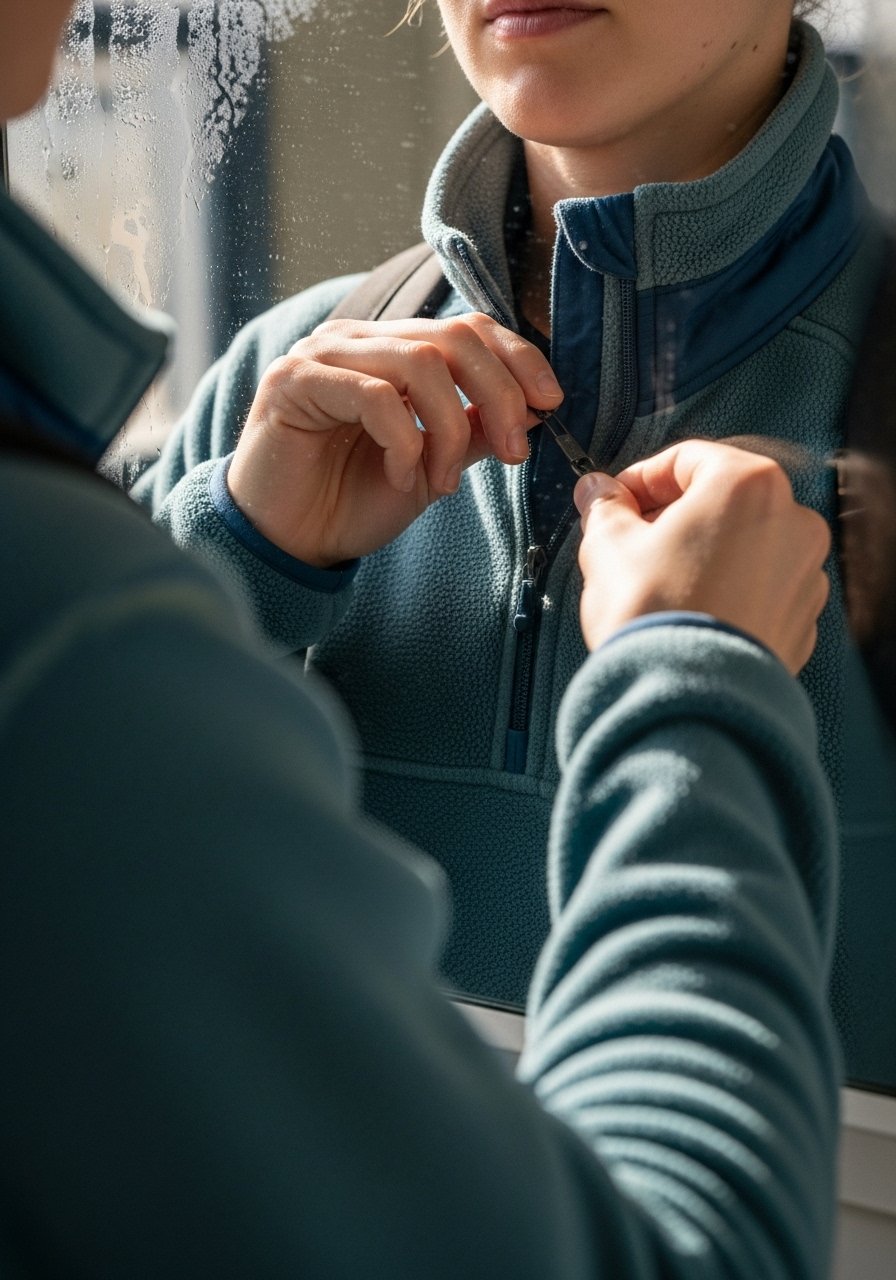
Next, I slip on a lightweight fleece. Zip it halfway for control. It traps warmth without bulk, perfect when clouds roll in.
Now the outfit breathes with me. Morning fog lifts, I unzip. Most overlook zippers—they let air flow without full removal.
Don't grab heavy sweaters. They overheat fast, hard to pack. I choose pullovers that roll small.
Step 3: Top with a Protective Shell
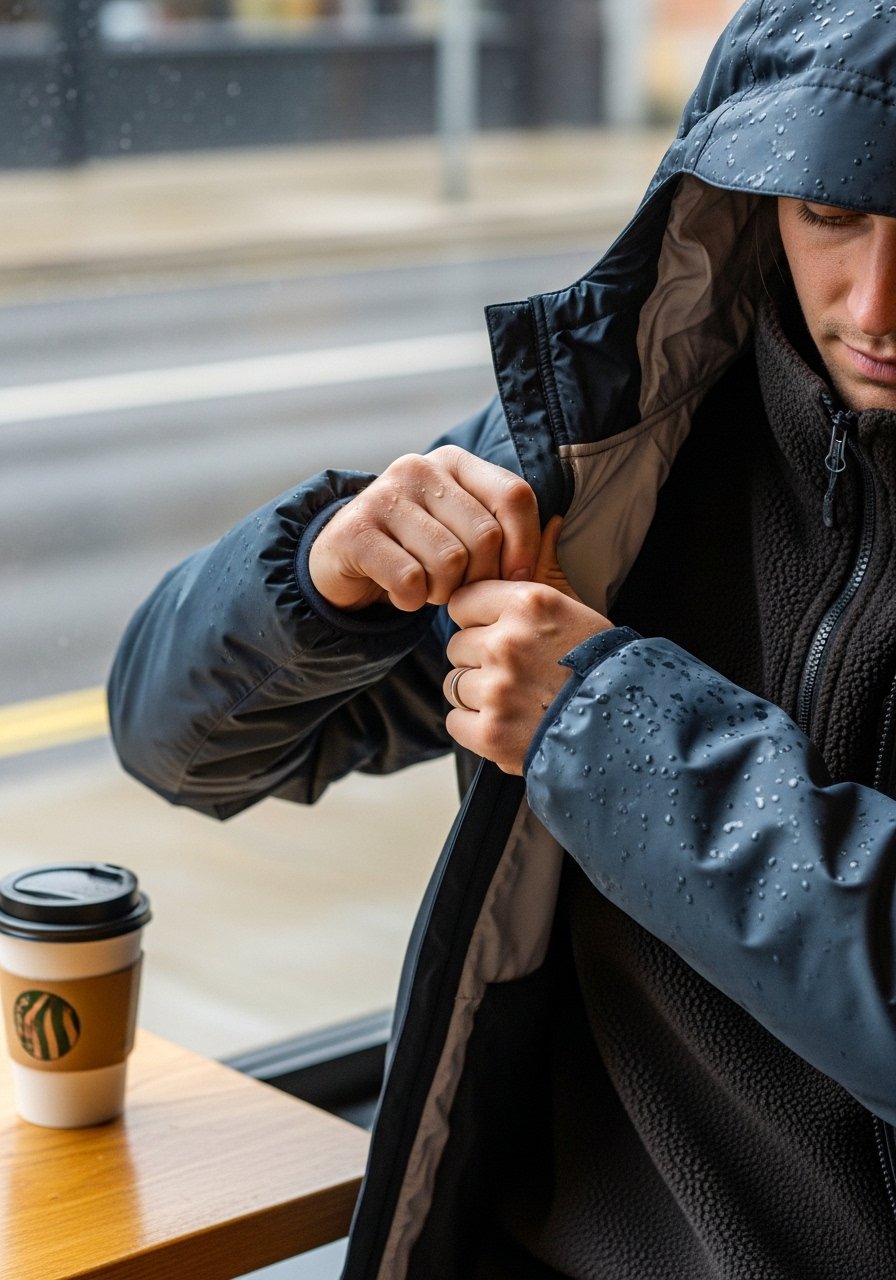
I finish with a packable shell. Waterproof, windproof, stuffs into its pocket. Rain starts? Pull it on quick.
Outfit now handles downpours to sun. Changes the feel—dry outside matches calm inside. Insight: vents under arms prevent steam-up.
Skip bulky coats. They crush everything in your bag. Mine weighs ounces.
Step 4: Layer Accessories for Fine Tuning
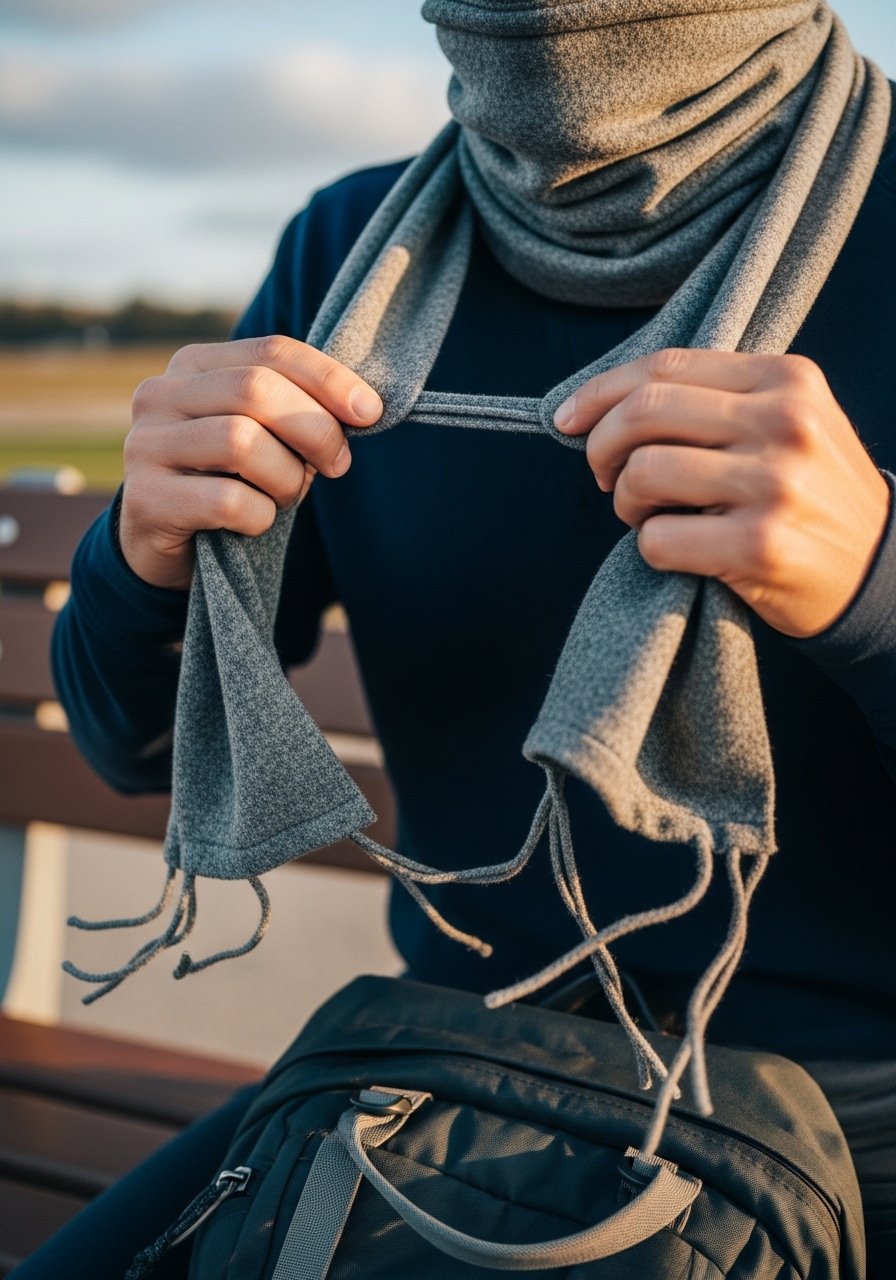
I add a buff or scarf last. Pulls up as balaclava in wind, drapes loose in sun. Socks match—merino for all-day feet comfort.
This tweaks without effort. Neck warms first in chill. People forget necks lose heat fast.
Avoid chunky scarves. They snag, add weight. Mine folds flat.
Step 5: Test the Full Layers Before Leaving
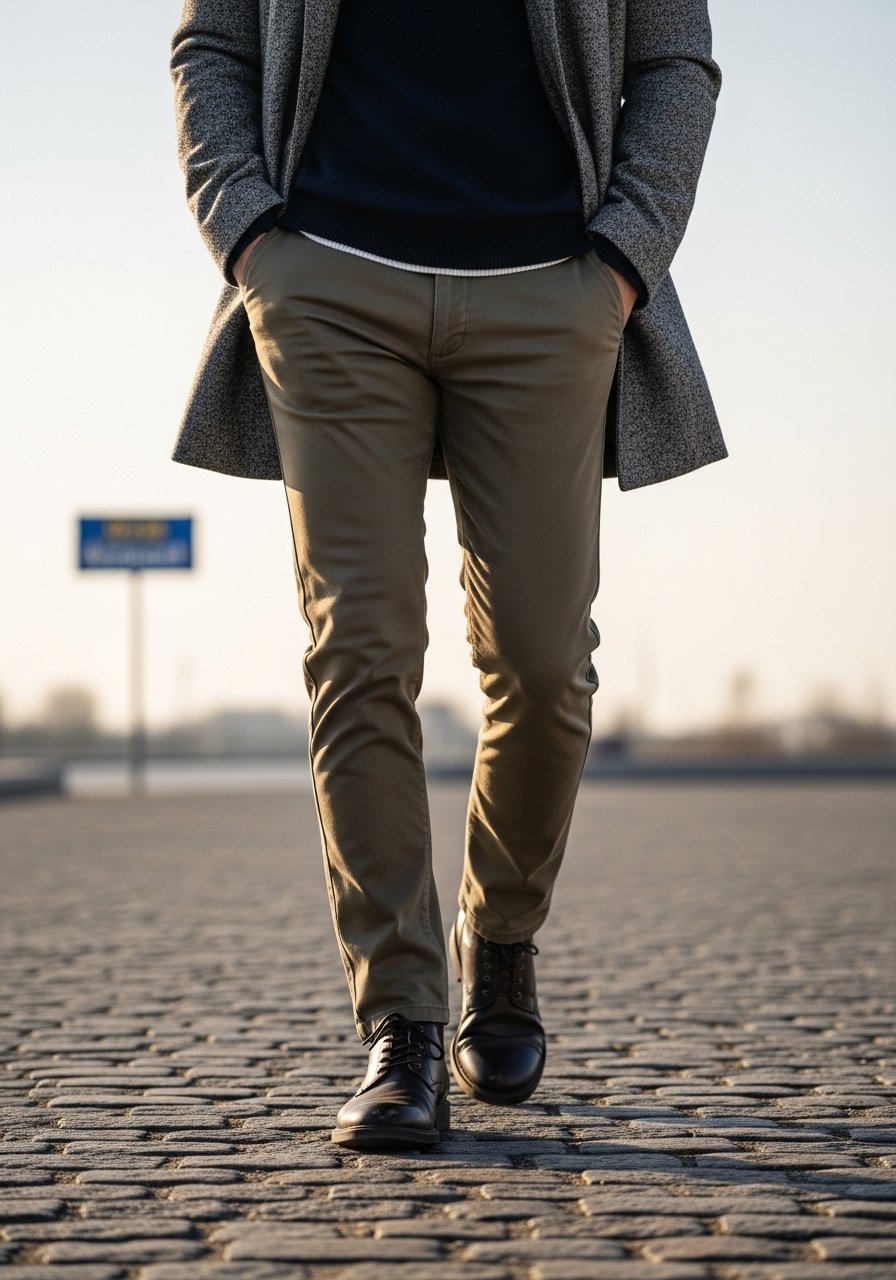
I walk my hotel room in full layers. Sit, bend, reach. Ensures no binding, easy peel-off.
Feel shifts to confident. Ready for train delays or sudden hikes. Insight: bulk hides till you move.
Don't skip this. Layers bunch in seats otherwise. Adjust now, travel smooth.
Step 6: Pack Layers in Compression Cubes
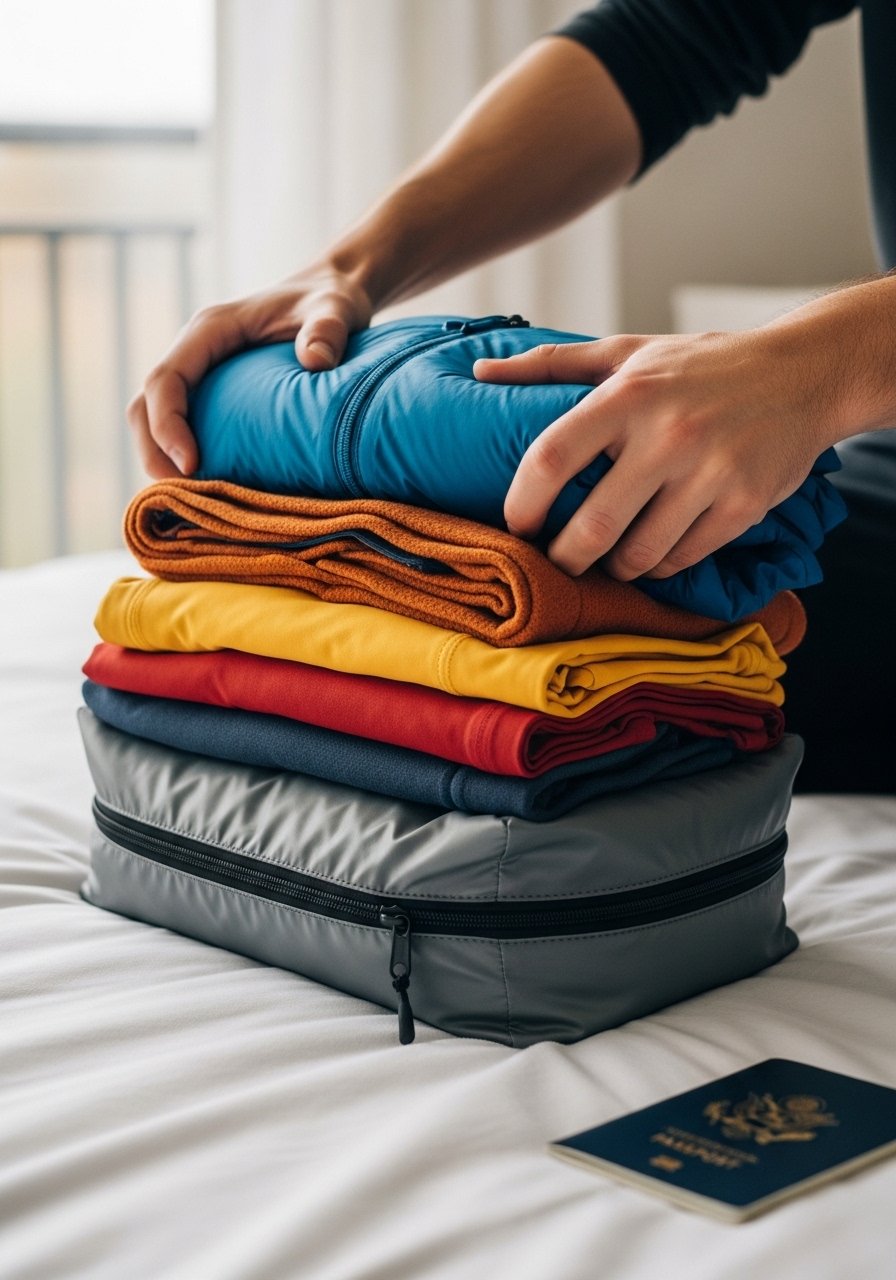
Roll base and mid into cubes. Shell separate, flat. Compresses to half size.
Bag closes easy, room for souvenirs. Changes packing from chaos to calm.
Most overpack extras. Insight: three layers cover 90% shifts.
Avoid loose stuffing. Wrinkles set in.
When Weather Forecasts Lie
I check apps, but they miss micro-shifts. Layers bridge that gap.
Once in the Alps, snow fell unplanned. My setup adjusted without panic.
- Base handles sweat from climbs.
- Mid adds instant warmth.
- Shell blocks wind.
Trust layers over predictions.
Mixing Layers for Different Climates
In variable spots like Seattle, I swap fleece for vest sometimes.
Short flights? Vest packs tiniest.
- Vest over base for mild days.
- Full mid in mountains.
- Always shell ready.
Keeps options open, bag light.
Staying Comfortable on Long Travel Days
Airports chill, planes vary. Layers let me adapt seat by seat.
I peel mid during boarding rush.
No sweat, no freeze. Just even feel all day.
Final Thoughts
Start with base and shell next trip. Add mid as needed.
You'll move easier, stay calm through changes.
Layers make weather a detail, not the day. Worth the small prep.
Leave a Reply